

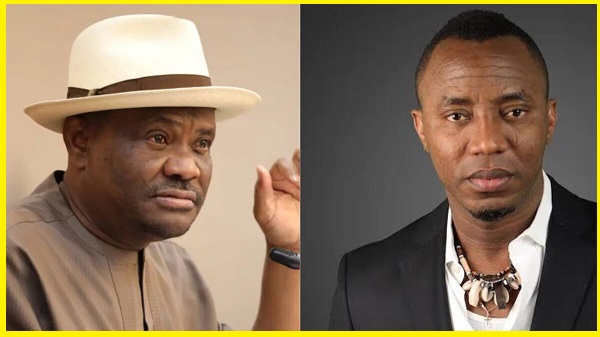
Human rights activist and former presidential candidate, Omoyele Sowore, has launched a blistering attack on the Minister of the Federal Capital Territory, Nyesom Wike, describing him as a political bully whose actions, according to him, will eventually lead to disgrace.
Sowore, known for his blunt and unapologetic style, made the remarks while reacting to recent political developments involving the former Rivers State governor. He accused Wike of thriving on intimidation, power play, and strong-arm tactics rather than democratic engagement and respect for dissenting voices.
According to Sowore, Wike’s brand of politics is rooted in coercion and fear, warning that such an approach may deliver temporary influence but often ends badly in the long run. He argued that Nigerian politics has a history of powerful figures who appeared untouchable at their peak but later fell out of relevance due to arrogance and abuse of power.
“He behaves like a bully who believes power is permanent,” Sowore was quoted as saying, insisting that political authority should serve the people, not suppress them.
The activist further claimed that Wike’s frequent public outbursts and confrontational posture reveal a deeper intolerance for criticism, adding that democracy cannot thrive where intimidation replaces dialogue.
While Wike is yet to respond to the comments as of press time, the statement has already stirred reactions across social media, with supporters and critics engaging in heated debates over the minister’s political style and influence.
Some observers believe Sowore’s remarks reflect growing concerns among civil society groups about the shrinking space for opposition and free expression in Nigeria’s political environment. Others, however, dismissed the comments as political rhetoric aimed at staying relevant in national discourse.
As the exchanges continue, the clash of words between Sowore and Wike has once again highlighted the deep divisions in Nigeria’s political landscape — a space where power, personality, and public perception often collide.
For many Nigerians watching from the sidelines, the big question remains whether bold accusations like this will translate into accountability or simply fade into the noise of everyday political drama.
