

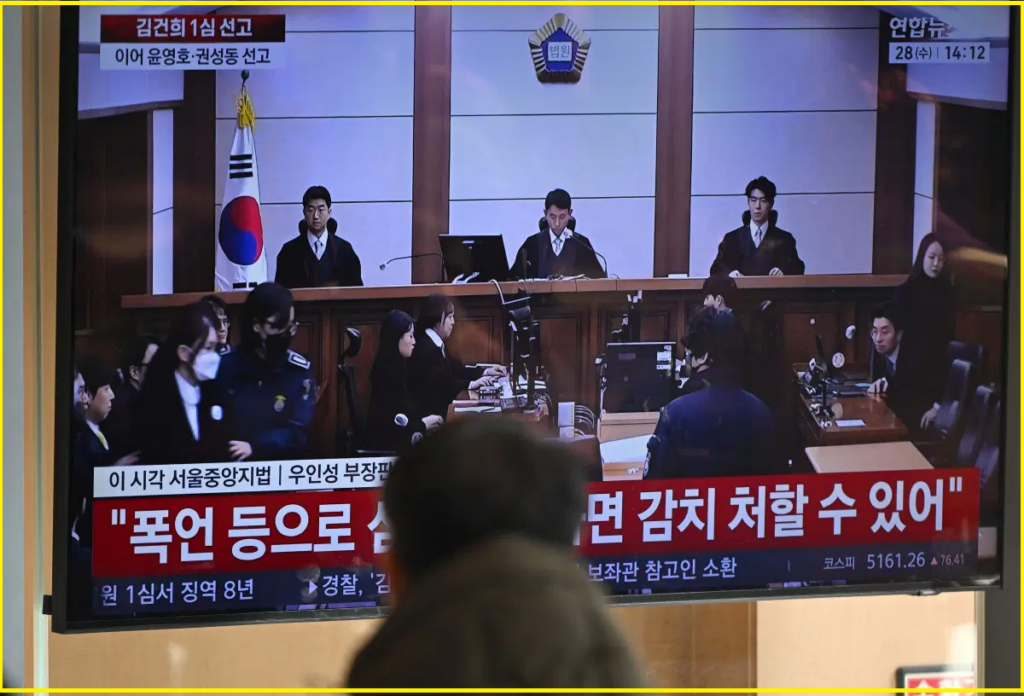
In a dramatic turn of events that has shaken South Korea’s political landscape, a court has sentenced the country’s former First Lady to 20 months in prison after finding her guilty of accepting bribes, marking another high-profile conviction in the nation’s long history of political accountability.
The ruling, delivered after months of legal proceedings, found that the ex–first lady unlawfully received valuable benefits linked to her influence and position at the peak of power. Prosecutors argued that the gifts and favours were not mere tokens but part of a broader corruption scheme that violated public trust and the law.
Court documents revealed that the case centered on allegations of improper dealings with business interests seeking access and favour, a practice the court described as an abuse of privilege and influence. The judge stressed that public officials and their families must be held to the highest ethical standards, noting that fame or status should never place anyone above the law.
The sentencing has sparked intense reactions across South Korea, with many citizens welcoming the verdict as proof that the judiciary remains firm against corruption, while others described the development as a painful chapter in the nation’s political history.
This conviction adds to a growing list of top political figures in South Korea who have faced jail terms in recent years, reinforcing the country’s tough stance on corruption at the highest levels of government.
As the former first lady begins her prison term, analysts say the case will likely deepen public debate on transparency, power, and accountability in governance.
