
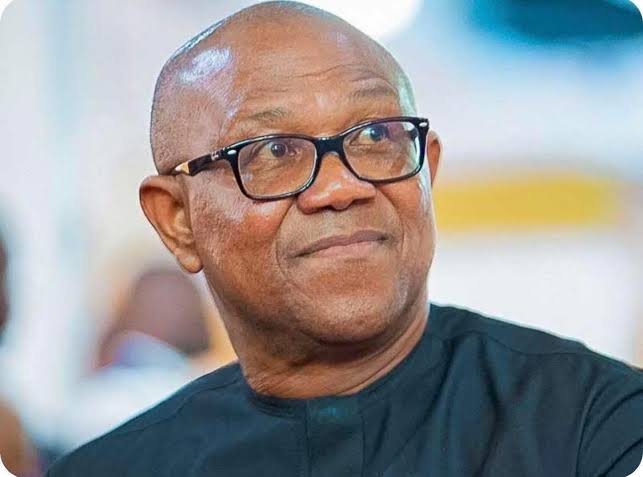
Former presidential candidate and Nigeria Democratic Congress (NDC) presidential candidate, Peter Obi, has unveiled the broad outline of his vision for a productive, united, and prosperous Nigeria, promising far-reaching reforms aimed at rebuilding the nation’s economy and improving the quality of life for all citizens.
In a statement released on July 1, 2026, Obi recalled that when he first declared his intention to run for Nigeria’s highest office, he pledged to place the country on the path of unity and national transformation. He said that, in the coming weeks and months, he would provide detailed insights into his roadmap for addressing governance challenges, restoring public confidence, and creating a more peaceful, equitable, and prosperous nation.
According to Obi, his vision is founded on the principles of unity, inclusion, social justice, equity, and the freedom of every Nigerian to pursue legitimate aspirations without discrimination.
Human Capital at the Centre of Development
Obi identified education and healthcare as the cornerstone of national development, describing human capital as the most critical infrastructure for sustainable economic growth and efficient public service delivery.
He stressed that meaningful reforms in these sectors are necessary if Nigeria is to fully harness the potential of its youthful population and achieve long-term prosperity.
Tackling the Out-of-School Children Crisis
As part of his proposed agenda, Obi said his administration would immediately establish a task force dedicated to drastically reducing the number of out-of-school children across the country.
He noted that improving access to quality education would remain a top priority, while also expanding opportunities for practical skills acquisition through Technical and Vocational Education and Training (TVET).
Driving Industrialisation Through TVET
Obi explained that greater investment in TVET would support his vision of large-scale industrialisation driven by agriculture, local production, and value addition.
He proposed the establishment of industrial parks across Nigeria’s geopolitical zones, where agricultural resources and manufacturing value chains could thrive.
To achieve this, he advocated stronger partnerships among government, the private sector, and faith-based educational institutions to adequately fund and equip vocational centres. He also proposed an apprenticeship model similar to Germany’s dual education system, allowing students to combine classroom learning with practical workplace experience.
Addressing Unemployment
Obi lamented the growing mismatch between high unemployment and the shortage of skilled labour, a situation that has compelled many Nigerian entrepreneurs to establish businesses outside the country.
He maintained that equipping young Nigerians with relevant technical skills would help transition the nation from a consumption-driven economy to a production-driven economy capable of creating jobs and expanding wealth.
Promoting Character and Civic Education
Beyond economic reforms, Obi also proposed renewed emphasis on character and civic education to strengthen trust, leadership, patriotism, and shared national values.
According to him, these principles would form an essential part of the governance framework needed to build a united and progressive Nigeria.
He concluded his message with his familiar campaign slogan:
“A New Nigeria is Possible.”