

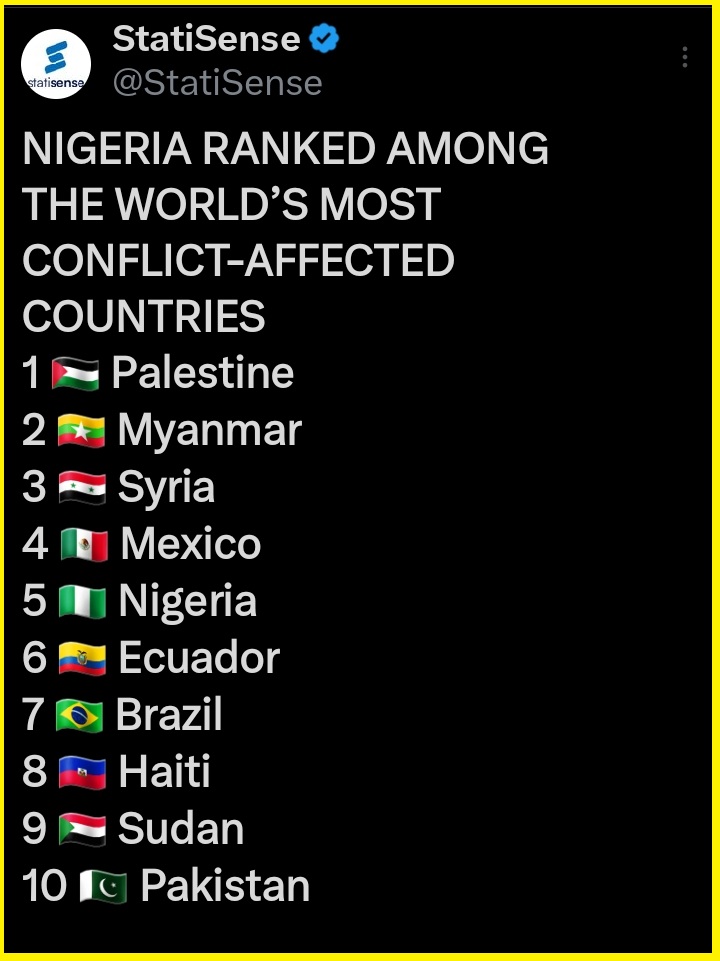
Nigeria has been listed among the world’s most conflict-affected nations, according to recent reports from international monitoring organizations. The ranking highlights the growing concerns over security challenges, communal clashes, insurgency, and criminal activities that continue to affect millions of Nigerians across various regions of the country.
The report, released by [insert credible source, e.g., the Global Peace Index or ACLED if known], details that Nigeria’s persistent insecurity stems from multiple factors, including armed banditry, farmer-herder clashes, terrorist insurgencies in the Northeast, and recurring political tensions in parts of the South and Middle Belt. These challenges, the report emphasizes, have had far-reaching consequences on economic development, social stability, and the overall well-being of citizens.
Analysts note that Nigeria’s high ranking among conflict-affected countries is particularly worrying given the nation’s economic and population size. The report states that violence and insecurity have displaced millions of people, disrupted agriculture and trade, and eroded public confidence in the ability of security agencies to protect citizens.
Security experts argue that addressing the crisis requires a multifaceted approach, combining enhanced security operations with community engagement, conflict resolution, and strategic investment in social infrastructure. “Security challenges in Nigeria are complex, and the solutions must go beyond military response. There must be meaningful dialogue with communities, preventive measures, and support for economic opportunities,” said one analyst.
The ranking has sparked national conversations on social media and in political circles, with citizens expressing both concern and calls for urgent action from government authorities. Many Nigerians have urged the federal and state governments to prioritize peacebuilding, strengthen law enforcement, and implement policies that reduce tensions between communities and armed groups.
Humanitarian organizations have also weighed in, warning that prolonged conflicts continue to strain healthcare, education, and food security systems, particularly in the Northeast and North-central regions. The report underscores the urgent need for coordinated interventions to prevent further escalation and to safeguard vulnerable populations.
In response to the findings, government officials have reiterated their commitment to tackling insecurity. They highlighted ongoing initiatives, including military operations against insurgents, community policing programs, and efforts to mediate disputes between farmers and herders. Authorities have emphasized the importance of citizen cooperation in reporting crimes and supporting conflict-resolution programs.
As Nigeria grapples with these challenges, the ranking serves as a stark reminder of the urgent need for national dialogue, strategic planning, and collaborative efforts to restore peace, promote stability, and ensure the safety of all Nigerians.
